VTC Logo

Knowledge Center

Moisture Damage

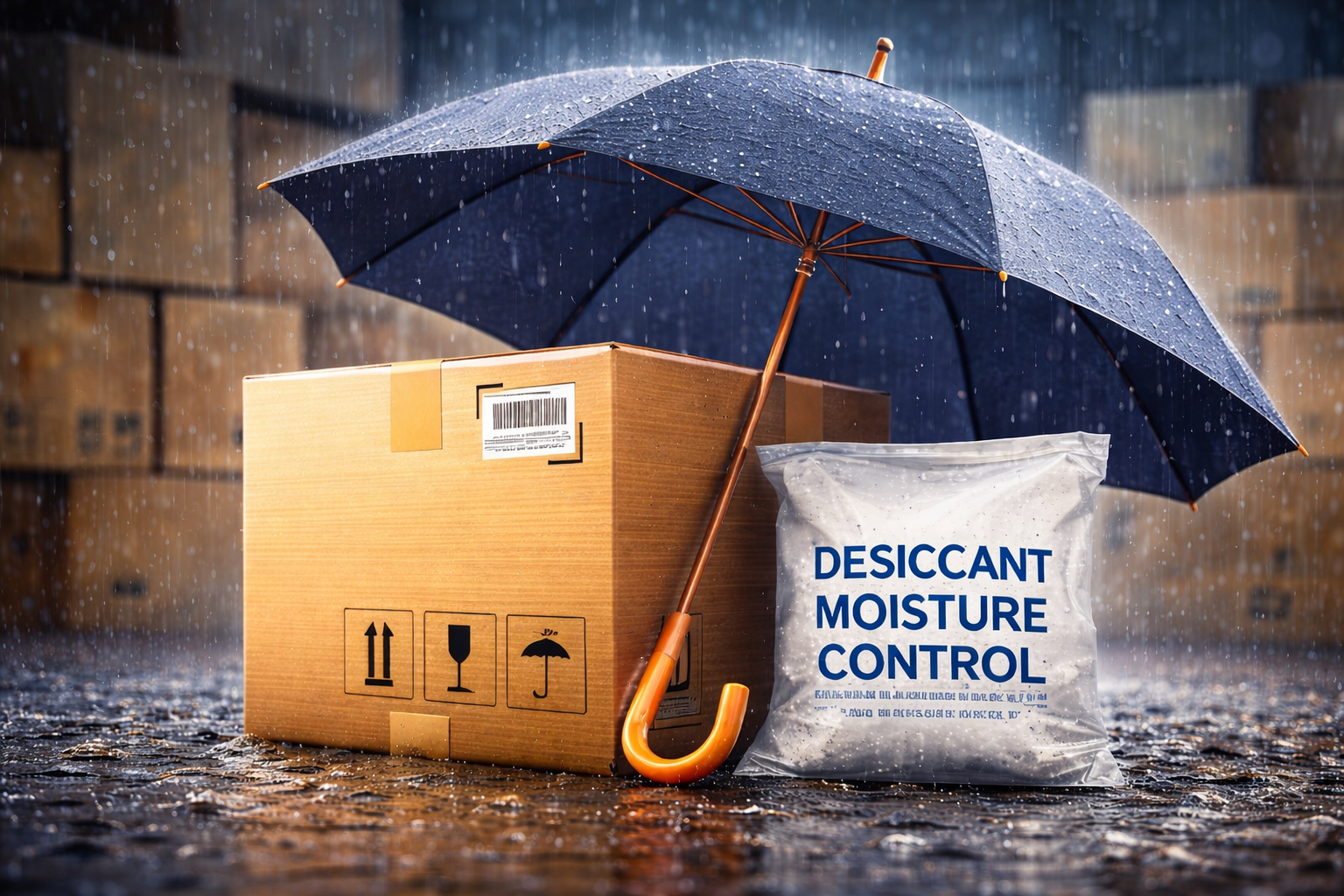
Moisture damage occurs when excess humidity comes into contact with products during storage or transportation. It can lead to issues such as corrosion, mold growth, material degradation, and loss of product quality.

Many products are vulnerable to moisture, including electronics, pharmaceuticals, textiles, food items, and industrial components. Even small amounts of trapped moisture can cause long-term damage if not properly controlled.

Moisture can originate from environmental humidity, packaging materials, temperature fluctuations, or condensation formed during transit. Changes in climate and long shipping durations further increase the risk of moisture-related problems.

Effective moisture control solutions help prevent damage, protect product integrity, and reduce financial losses. Using the right desiccants and packaging methods ensures safe storage, reliable transportation, and extended product life.

Mechanisms of Moisture Ingress and Condensation

Effects of Humidity on Material Integrity and Performance

Moisture Mitigation and Environmental Control Strategies

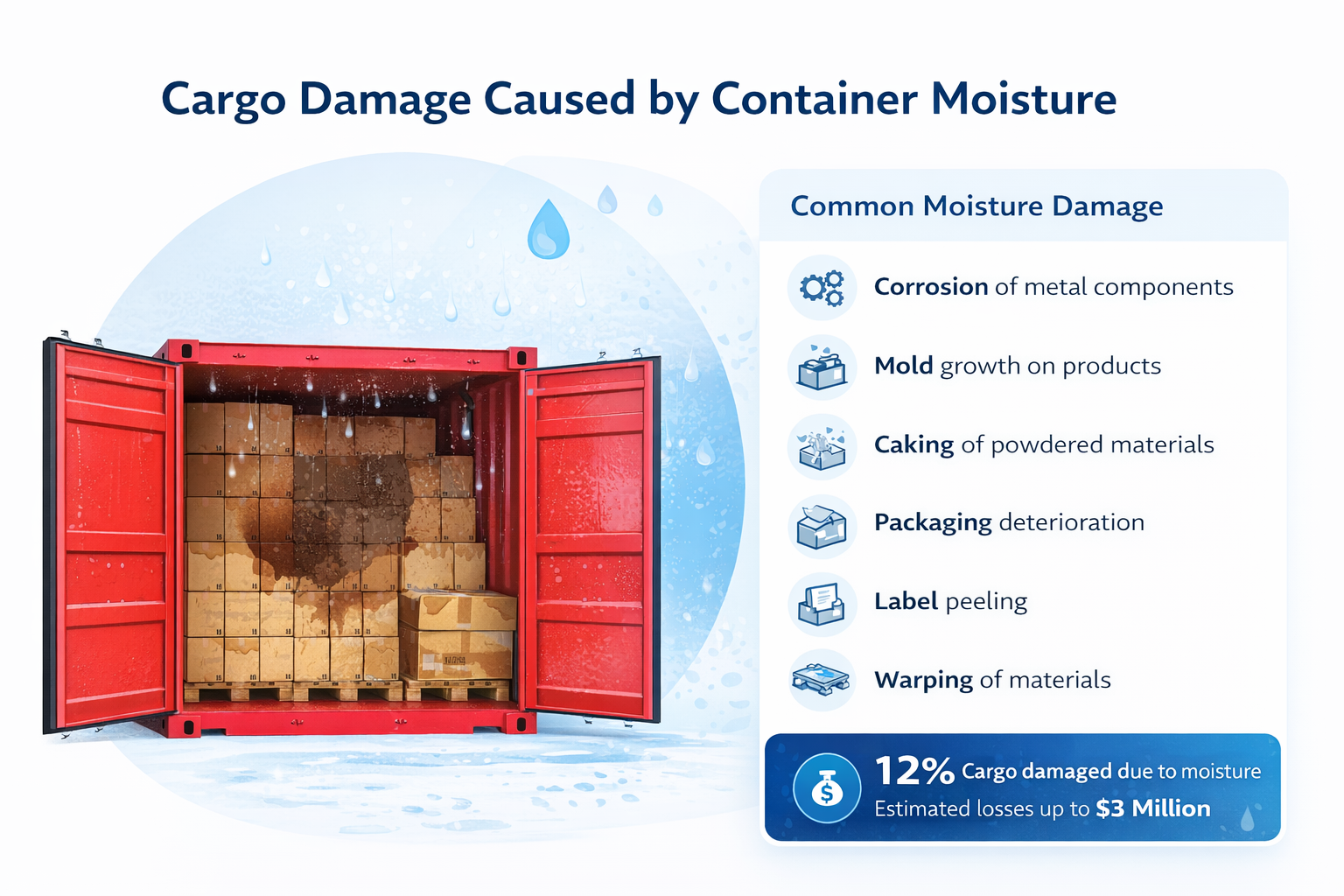
Goods shipped in sea containers are highly vulnerable to moisture damage because the enclosed container environment creates ideal conditions for condensation. During sea transport, temperature fluctuations cause warm, moisture-laden air to cool, leading to condensation as cooler air holds less moisture.

Container Moisture Damage

When temperatures fall below the dew point, moisture condenses on the inner surfaces of the container, particularly on the ceiling and walls. These water droplets can drip onto the cargo, a phenomenon known as container rain. Moisture may also form inside packaging, referred to as cargo sweat.

These condensation cycles often repeat throughout the journey as containers pass through changing climates. Over time, repeated exposure increases the risk of mold growth, corrosion, deformation, malfunction, and unpleasant odors, ultimately affecting product quality and usability.